Anion Gap Calculator to help with Assessing normal anion gap acidosis
What exactly is an Anion Gap?
The anion gap is a calculated value that helps to assess acid-base balance and recognize patterns in a patient’s electrolytes. It compares the recorded positive and negative ions in a typical electrolyte panel, usually using serum sodium, serum chloride, and serum bicarbonate. As not every ion is directly measured on routine serum chemistry testing, the anion gap acts as a useful diagnostic aid when interpreting a lab result.
In clinical practice, the anion gap helps clinicians work through an acid-base disorder by showing whether there are unmeasured anions contributing to metabolic acidosis. A above-normal value can point toward conditions with excess acids, while a normal value can suggest that bicarbonate has been lost and replaced by chloride. That distinction is especially important when evaluating normal anion gap acidosis, also called non-anion gap metabolic acidosis or hyperchloremic metabolic acidosis.
The concept is straightforward, but the interpretation can be nuanced. Because sodium is a major measured cation and chloride and bicarbonate are major measured anions, the balance among them reflects the body’s internal chemistry. When serum chloride rises as bicarbonate falls, the anion gap may remain unchanged even though acidosis is present. That is why the anion gap is not just a number; it is part of a broader clinical interpretation of a patient’s metabolic state.
How an Anion Gap Calculator Works
An anion gap calculator automates the calculation formula and lowers the chance of arithmetic errors. In its plainest form, the formula is:
Anion gap = serum sodium - (serum chloride + serum bicarbonate)
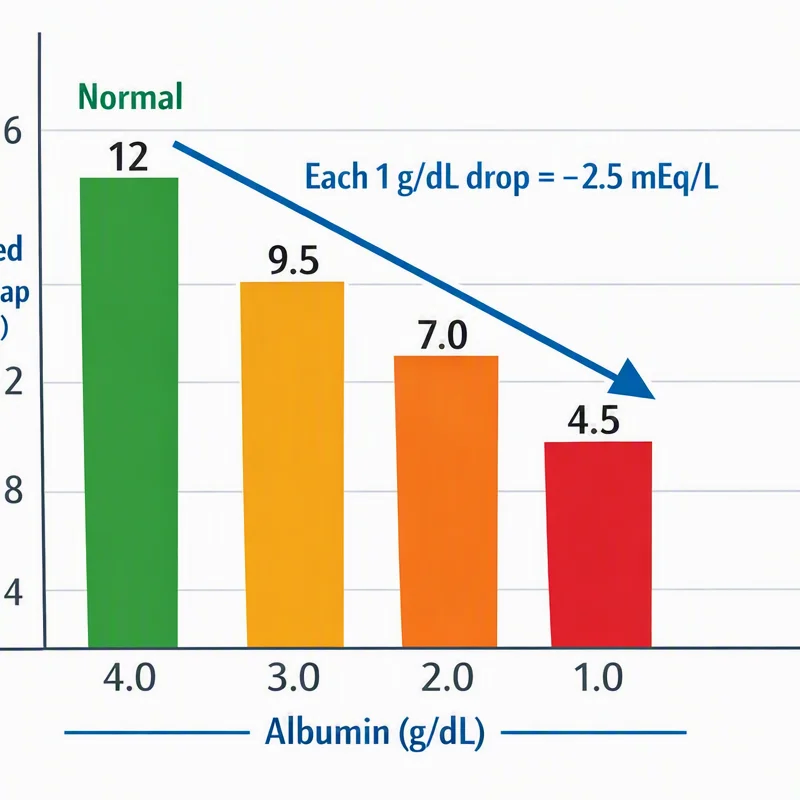
This calculation uses routine laboratory values from an electrolyte panel. Some calculators may also include an albumin correction, because serum albumin is a major unmeasured anion and can shift the expected value. When albumin is low, the raw anion gap may look lower than it truly is, which can hide clinically important findings.
The calculator is most helpful when a clinician wants a rapid interpretation guide for a patient with suspected acidosis. It gives a quick estimate of whether the result falls within the expected reference interval or suggests a deviation that needs further evaluation. A normal lab result does not always mean there is no problem; it may simply mean that the pattern is consistent with bicarbonate loss rather than added acids.
Many calculators also help identify a corrected anion gap by accounting for hypoalbuminemia. That correction can be useful in ill patients, where low albumin is common and may change the apparent picture. In other words, the calculator is a useful shortcut, but its output still requires sound clinical interpretation in light of the full clinical context.
Typical Anion Gap Acidosis Defined
Normal anion gap acidosis is a form of metabolic acidemia in which the measured anion gap remains inside the usual range despite a fall in bicarbonate. It is also called non-anion gap metabolic acidosis and hyperchloremic acidosis because chloride often rises to compensate for the lost bicarbonate. This keeps the anion gap from increasing even though the body’s acid-base equilibrium has shifted toward acidity.
This pattern is different from high anion gap acidosis, where unmeasured acids build up. In normal anion gap acidosis, the key issue is usually loss of bicarbonate or impaired renal acid handling rather than the production of new acids. The result is often described as a mild acidosis, but the severity depends on the underlying cause and the patient’s overall health.
Recognizing this pattern is essential because it focuses the differential diagnosis. A calculator can reveal that the anion gap is not elevated, but that finding should draw focus to chloride, bicarbonate, and the likely source of bicarbonate loss. In that sense, the anion gap calculator is a useful beginning for evaluation, not the final answer.
Frequent Causes of Regular Anion Gap Acidosis
Various disorders can lead to normal anion gap acidosis. A common cause is diarrhea, which leads to gastrointestinal bicarbonate loss. When bicarbonate is lost from the gut, the body may preserve chloride to preserve electrical neutrality, producing a high chloride profile and a normal anion gap.
Another important cause is renal tubular acidosis, a collection of disorders in which the kidneys have difficulty with kidney acid handling. In these conditions, the kidneys cannot excrete acid properly or do not reclaim bicarbonate efficiently. The result can be a persistent non-anion gap metabolic acidosis even when kidney function is otherwise not severely impaired.
Chloride-rich intravenous fluids can also play a role. Substantial amounts of chloride-rich solutions may dilute bicarbonate and increase serum chloride, leading to hyperchloremic metabolic acidosis. This is especially relevant when reviewing recent treatments, because the acid-base pattern may indicate therapy rather than a primary disease process.
Additional causes may include certain medications, fistulas, or renal disorders, but the most practical common categories are diarrhea, renal tubular acidosis, and chloride load. When the underlying cause is not apparent, the anion gap calculator can help narrow the workup on these pathways.
How to Read the Result
Assessing the result begins with checking the serum electrolytes as a whole, not in isolation. A low bicarbonate level plus a normal anion gap and elevated chloride often suggests hyperchloremic metabolic acidosis. The next question is whether the pattern fits gastrointestinal loss, renal loss, or another source of bicarbonate loss.
Potassium is also key. Some forms of renal tubular acidosis are associated with low potassium, while others may present with high potassium. That detail can help refine the differential diagnosis and suggest which kidney acid handling defect is most likely.
The clinical context plays a major role just as much as the numbers. A lab pattern consistent with metabolic acidosis may be seen in a patient with diarrhea, recent fluid administration, or kidney disease. The calculator should therefore be used as part of a broader assessment that includes symptoms, medications, volume status, and recent treatments.
In practice, the best approach is to combine the calculator output with a careful clinical interpretation of the serum bicarbonate level, chloride level, potassium level, and the patient’s overall presentation. This helps determine whether the result reflects a transient change or a more significant acid-base disorder.
When to Revise the Anion Gap for Albumin
Albumin is one of the primary unmeasured anions in plasma, so low serum albumin can lower the observed anion gap. This means that a patient with hypoalbuminemia may have a seemingly normal or low anion gap even when an additional condition is present. In those cases, using a corrected anion gap gives a more accurate picture.
Albumin correction is especially helpful when the clinical picture suggests more than simple bicarbonate loss. If the uncorrected value looks normal but the patient appears significantly ill, the correction may reveal a hidden disturbance. This is a matter of protein binding and ion balance, not just arithmetic.
Many anion gap calculators include albumin adjustment because it improves interpretation in patients with low protein levels. The key point is that the raw number can be unreliable when albumin is low. If a clinician ignores this, a mixed acid-base disorder may be overlooked.
As a rule, the lower the albumin, the more cautious the interpretation should be. Albumin correction does not replace clinical judgment, but it can improve the precision of the anion gap as a screening tool and help uncover an otherwise obscured acid-base disorder.
Detailed Step-by-Step Worked Calculation
Below is a stepwise demonstration with typical lab values:
Serum sodium: 140 mEq/L
Serum chloride: 112 mEq/L Serum bicarbonate: 20 mEq/LWith the calculation formula:
Anion gap = 140 - (112 + anion gap clinical significance 20)
That equals 140 - 132 = 8 mEq/L.
If the lab’s reference range for the anion gap is roughly 8 to 12 mEq/L, this result falls within the expected range. However the low bicarbonate continues to indicate acid-base acidosis. Since the anion gap is normal, the pattern suggests hyperchloremic metabolic acidosis, commonly linked to diarrhea, renal tubular acidosis, or chloride load.
When the patient’s albumin is low, say due to hypoalbuminemia, the adjusted anion gap may be higher than 8. That is why the calculator should be viewed as part of the overall evaluation, not a standalone verdict. A normal raw value can still coexist with another acid-base issue if albumin is reduced or if there is a mixed disorder.
This illustrates how a calculator supports the overall evaluation. It helps confirm that the pattern is consistent with normal anion gap acidosis and directs attention toward the cause of bicarbonate loss rather than excess unmeasured acids.
When Further Testing Is Needed
Further evaluation is needed when the cause is unclear, the patient is symptomatic, or the result does not fit the rest of the clinical picture. A blood gas analysis can confirm the degree of acidemia and help distinguish respiratory from metabolic contributions. It can be particularly useful if the serum bicarbonate is low but the overall picture is uncertain.
A urinary anion gap may be ordered when renal tubular acidosis is suspected. It can help distinguish kidney acid-handling problems from gastrointestinal bicarbonate loss by estimating whether the kidneys are appropriately excreting ammonium. In the setting of persistent non-anion gap metabolic acidosis, it can be a valuable next step.
Lactate testing may be appropriate if there is concern for a combined disorder or if the clinical situation could involve poor tissue perfusion or another high-gap process. Even though the anion gap calculator suggests a normal result, lactate can help exclude additional contributors.
Kidney function tests are also helpful, especially when renal tubular acidosis, chronic kidney disease, or medication effects are part of the differential diagnosis. Together with blood gas analysis and urine studies, they help round out the evaluation and identify the underlying cause.
Frequently Asked Questions
What is the normal anion gap range?
The anion gap normal range depends on the laboratory and whether potassium is included in the calculation. Many reference intervals fall around 8 to 12 mEq/L, but the exact range can vary by method and analyzer. Always assess the value using the lab’s own reference interval.
How do you calculate the anion gap with sodium, chloride, and bicarbonate?
Use the calculation formula: serum sodium minus the sum of serum chloride and serum bicarbonate. In other words, anion gap = sodium - (chloride + bicarbonate). An anion gap calculator performs this process and helps reduce errors.
Why do you correct the anion gap for albumin?
You correct for albumin because low serum albumin can reduce the measured gap and hide a clinically important disturbance. With hypoalbuminemia, the corrected anion gap gives a better reflection of the true acid-base state.
What causes normal anion gap acidosis?
Common metabolic acidosis causes with a normal gap include diarrhea, renal tubular acidosis, gastrointestinal bicarbonate loss, and exposure to chloride-rich intravenous fluids. These conditions usually decrease bicarbonate while raising chloride, producing hyperchloremic metabolic acidosis.
When should a urine anion gap be performed?
A urine anion gap is commonly used when the cause of normal anion gap acidosis is unknown and renal tubular acidosis is being suspected. It can assist differentiate kidney acid-handling issues from gastrointestinal bicarbonate loss and is most useful alongside blood gas analysis, serum electrolytes, Discover more and kidney function tests.